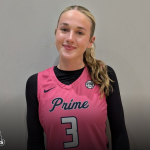





How I Judge, Scout, and Ultimately Rank the Talent in Illinois

Before getting into how these rankings are built, it is important to say this first. I am human. I will miss players. I will make mistakes. I cannot see everyone, and I do not pretend to. With that being said, I am always open to discussion and hearing different opinions. If you feel someone is being overlooked, or you simply want to talk about your or your player/child's ranking, please email me (pghbyron@gmail.com) or send a DM on X. I check my X messages once a week (every Sunday) and will get back to you as soon as I can. Email will always be the fastest way to reach me. Remember, our rankings are College Prospect Rankings.
Now let's go into it.
Ranking season is around the corner, and the next biggest update will be the freshman class (before the first weekend of February). As we head into AAU season, college coaches will use our rankings as a guideline to identify players they may want to evaluate based on grouping (1–10, 11–25, 26–40, etc.). Coaches rarely focus on the exact number next to a name. Value is usually determined by players three to five spots above and three to five spots below. Typically, D1 prospects fall between #1–35, D2 prospects between #36–75, and D3 prospects between #76–100. These groupings shift depending on the overall strength of a class, but I generally try to stay within that structure.
When it comes to how I build college prospect rankings in Illinois, the foundation is live evaluations, repeated viewings, and official offers. Our ranking system is not designed to say who is better than who. Competition across the state is uneven. Everyone knows this, even if many avoid saying it.
Because of that, stats do not hold enough value to move a player significantly up or down the rankings. There are too many uncontrollable factors involved. I lean toward what can be evaluated in a more controlled way. I factor in role, usage, system, and level of competition. Numbers without context are usually misleading. A player putting up big stats in a high usage role on a non competitive team or in a weak conference.. is producing empty numbers when it comes to college recruiting. That player will not be ranked higher than someone producing efficiently with fewer touches while playing strong competition. I like to figure out what a player is asked to do and then judge them on how well they execute that.
The first thing I care about is feel for the game. How a player processes reads, reacts to pressure, and plays within the flow matters. I pay close attention to decision making with and without the ball. Players who consistently make the right play, even when it does not show up in the box score, are the ones who translate. Competitiveness, confidence, and energy are non-negotiables. I watch how players respond when they are taken out of their rhythm, miss shots/airball, get subbed out, or are asked to do something uncomfortable. Body language on and off the bench, and a player's effort when not involved in the possession, all matter to me when I'm evaluating. A major plus is when a player asks referees questions. That usually shows curiosity and a desire to learn. I encourage players to read the referee handbook as well. It is the ultimate cheat code for this game.
I value versatility, but within reason. I care about what players do well and how consistently they do it within their ROLE. A player who understands spacing and timing often translates better than someone with a deeper bag but absolutely no feel for the game. That is another reason highlights and raw stats do not move the needle.
Lastly, height, frame, and length matter. Those are physical measurables that help project translation to the next level. College coaches usually look at this first. With underclassmen, they also look at parents to better understand potential growth spurt. If both parents are below 5'9", that often points toward the player being on the smaller side, which will significantly impact the level of offers you might get. Out of your control, but that's the truth.
My rankings are always meant to be fluid, not permanent labels. Spots change as players grow, roles evolve, and new information presents itself. If youre a player, team or parent who doesn't like to post offers, please share them with myself or Lisa Jordan.
I hope this provides a good amount of context. If not, please reach out for questions.